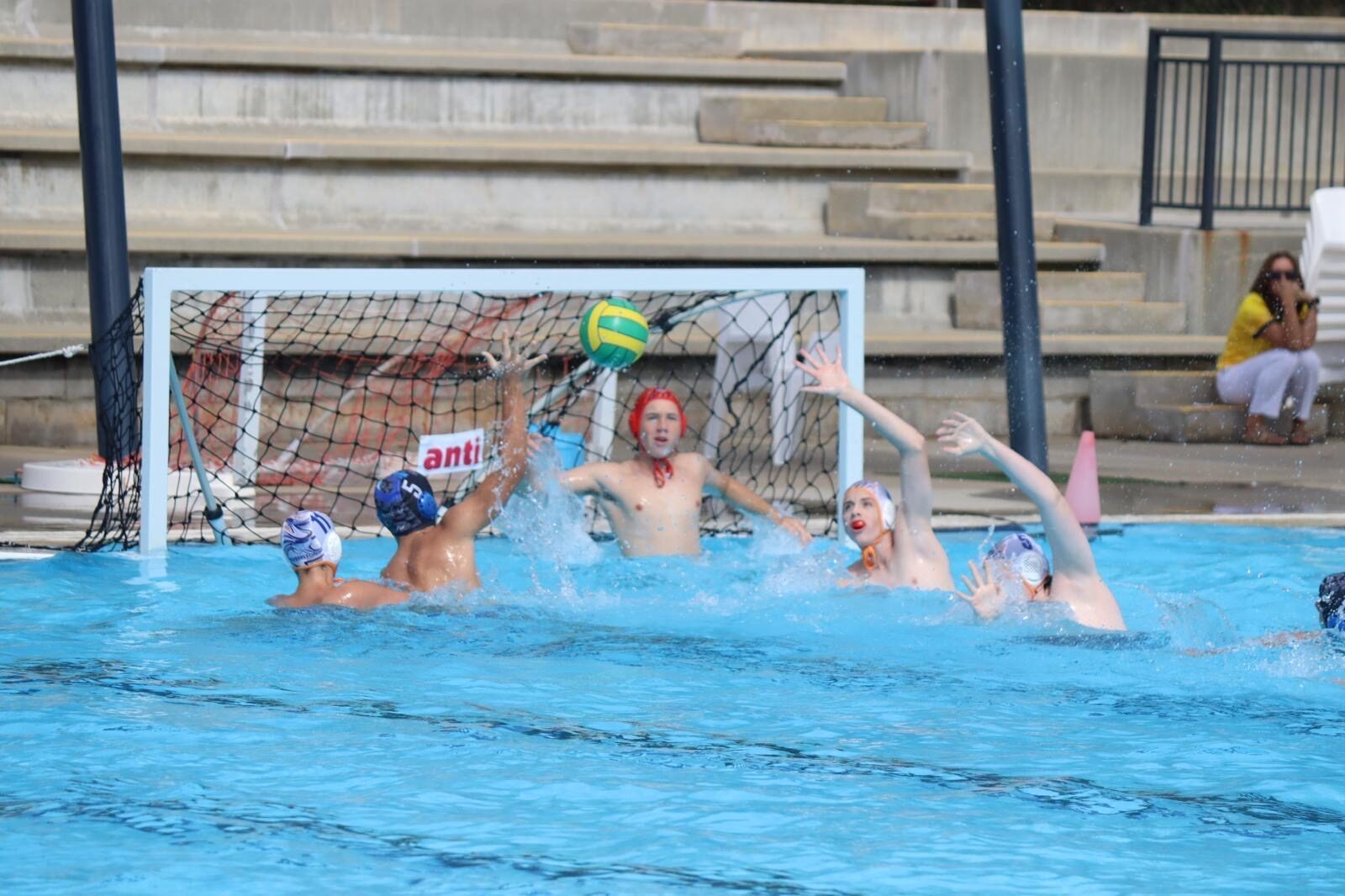
Last week we tackled the clock. Now for the other half of table duty: the score sheet. If you've ever glanced at one and thought "this looks like a spreadsheet designed by someone who actively dislikes me," you're not alone. But here's the secret — you're not doing maths, you're not making calls, you're just keeping a tidy record of what the referee tells you. That's it.
Here's how to be the Secretary without the stress.
What the job actually is
Every game has two table officials. One runs the clock (the Timekeeper); the other keeps the score sheet (the Secretary). If you're on the sheet, you are the official record of the game — the final say on the score, who scored, fouls, and timeouts. Sounds important, and it is — but the actual task is just careful note-taking.
You'll work as a pair with the other team's official. You're on the same side, keeping each other right. Lean on them, especially for your first few games.
Before the whistle: get set up
Five minutes of prep saves you a world of scrambling later:
- Fill in the header. Date, venue, the two team names, and which team is which cap colour (usually white vs dark/blue).
- Get the team lists. Each team manager writes in their players — cap number and name. Check they've filled both teams before you start. Some sheets pre-print cap numbers 1–13; others you write in.
- Confirm cap colours with the ref so your sheet matches what's in the pool.
- Have a pen that works (and a spare). Pencil is fine too — corrections happen.
Score sheets vary between competitions, and some grades use an electronic or app-based system instead of paper. If you're not sure which one you'll be using, ask a committee member or an experienced parent to show you a blank sheet before game day.
The one thing to remember
You only ever record what the referee signals. You never decide anything yourself.
Goal, foul, timeout — it only goes on the sheet when the ref calls it. You're a recorder, not a judge. That takes all the pressure off: if you're ever unsure what just happened, you wait for the referee's signal, or you ask.
Recording a goal
This is the main event, and it's simple:
- When the ref signals a goal, note which team scored, the cap number of the scorer, and (on most sheets) the time or quarter it happened.
- Update the running score — the total for each team. This is the number everyone actually cares about, so keep it current and clear.
- Announce the new score if that's your club's convention, so both benches and the scoreboard stay in sync.
A goal is the only thing that changes the score. Fouls, exclusions and timeouts get recorded, but they don't touch the score line.
Recording fouls (exclusions and penalties)
Don't panic — you're still just noting what the ref calls. There are two kinds of major foul you'll record:
- Exclusion (the player sits out for a bit, then can re-enter). Commonly noted with an E next to the player's cap number, plus the quarter.
- Penalty (a penalty shot is awarded). Commonly noted with a P, cap number, and quarter.
Here's the one that matters most: keep a tally of each player's personal fouls. In water polo, a player who reaches three major fouls (personal fouls) is out of the game for the rest of the match. The referee relies on the table to flag when a player hits that limit, so your tally isn't just record-keeping — it can affect the game. If you're not sure whether something was an exclusion or a penalty, ask the other official or wait for the ref's signal.
At junior level, exclusions and penalties come thick and fast. If you fall behind, don't invent entries — catch the score up first (that's what matters most), then tidy the fouls at the next break. A slightly messy foul column is fine; a wrong score is not.
Recording timeouts
When a team calls a timeout and the ref acknowledges it, tick it off against that team. Each team gets a set number of timeouts per game, so keeping track matters. It's a small job, but teams do keep track, so don't skip it.
The rhythm of the game
Once you settle in, the job has a comfortable rhythm:
- Watch the ref, not just the pool. Your cues come from the referee's whistle and signals.
- Record the event — goal, foul, or timeout — as it's called.
- Keep the running score current above all else.
- At the end of each quarter, take ten seconds to check your sheet against the scoreboard and with the other official. Catching a mistake at quarter-time is easy; catching it after the final whistle is a headache.
At the final whistle
- Confirm the final score with the other official and both benches.
- Fill in the results/summary box if your sheet has one.
- Get the referees to sign the sheet — this makes it official. Hand the completed sheet in as your competition requires (usually to pool control or the team manager).
If you make a mistake
You'll miscount a foul or forget to update the score for a moment. It happens to everyone. Cross it out cleanly, correct it, and move on — a score sheet with a few crossings-out is completely normal and totally valid. The referee and the other official are there to help you get it right. Nobody expects perfection from a volunteer parent; they expect a fair, honest record, and that's easy to give.
Want to feel like a pro?
Same as for the clock: Water Polo Australia's free online Table Officials course walks through the score sheet step by step, with examples. It's about an hour and gives you a basic accreditation — well worth it if you'll be doing table duty regularly, and required for the Australian Youth Championships. Search "Water Polo Australia Table Officials course" or ask our registrar.
The bottom line
Scoring looks technical from the pool deck, but from the chair it's just: watch the ref, note what's called, keep the score current, check your work at each break. You're not doing maths under pressure — you're keeping a tidy record with a teammate beside you.
The more parents who can confidently keep the sheet, the more our games run smoothly and the lighter the load on everyone. You've got this. 🌊
New to the sheet?
Ask to shadow an experienced parent for a game before you fly solo — the best way to learn is to sit alongside someone for a quarter or two. Any committee member can pair you up.
Get Involved with New Wave →